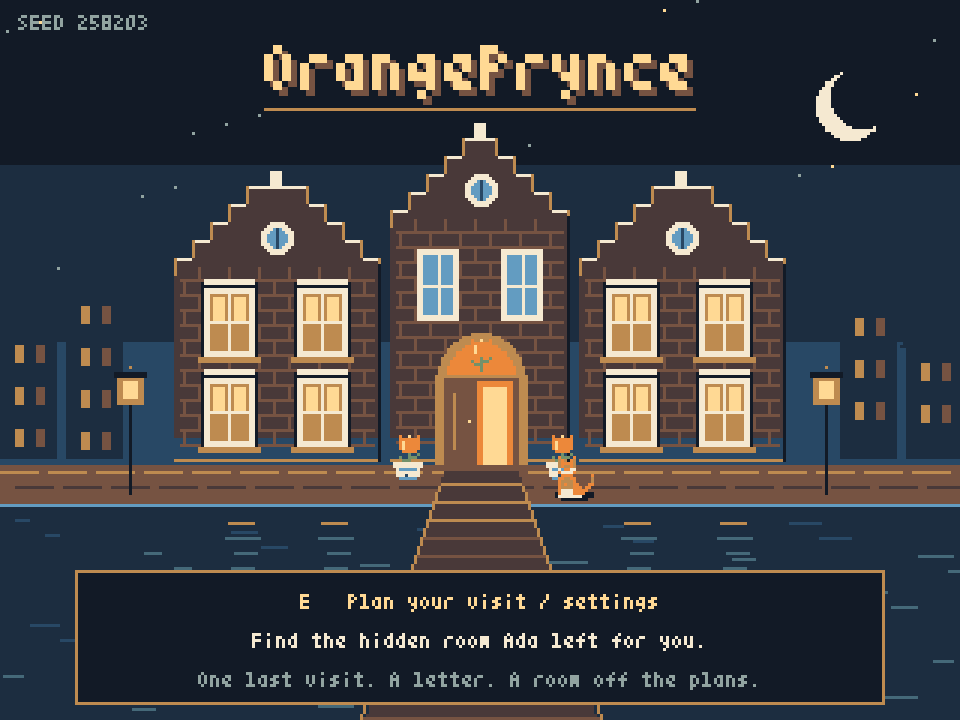
A little Dutch house with a long memory. And a cat who lives here.
OrangePrynce is a cozy mansion mystery I built as a small hackathon game in Python and Pyxel. It takes inspiration from the room-to-room exploration of Blue Prince, with an original story, puzzles, pixel art, and sounds.
You return to Huis Oranjeveer for one last visit before it leaves your family. Your grandmother Ada has left a letter asking you to find De Dageraadkamer, a room she left off the plans. Three inventions hold the heirlooms that open the way, and Prynce, the resident ginger cat, seems to know more than he lets on.
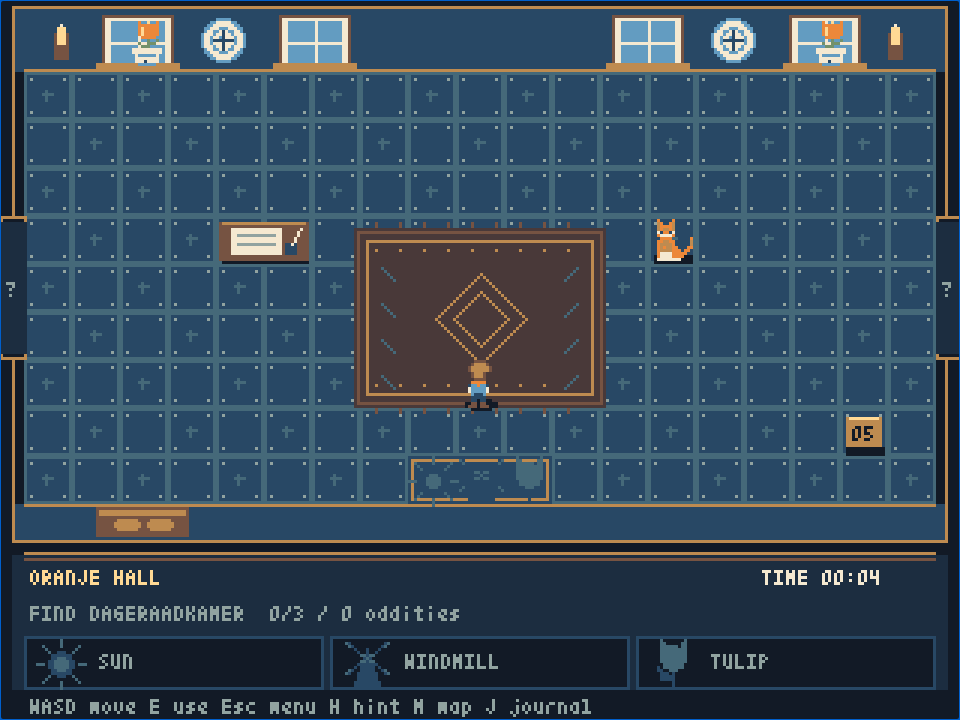
The mansion changes with each seed: rooms, clues, and puzzle configurations vary between visits, but stay consistent when you backtrack. Its connected puzzles involve a brass reading plate, a clockwork observatory, Ada's balance, and moonstones that shift in darkness but stay still in the light. Notes scattered through the house help you make the connections, while a journal keeps track of what you have discovered.
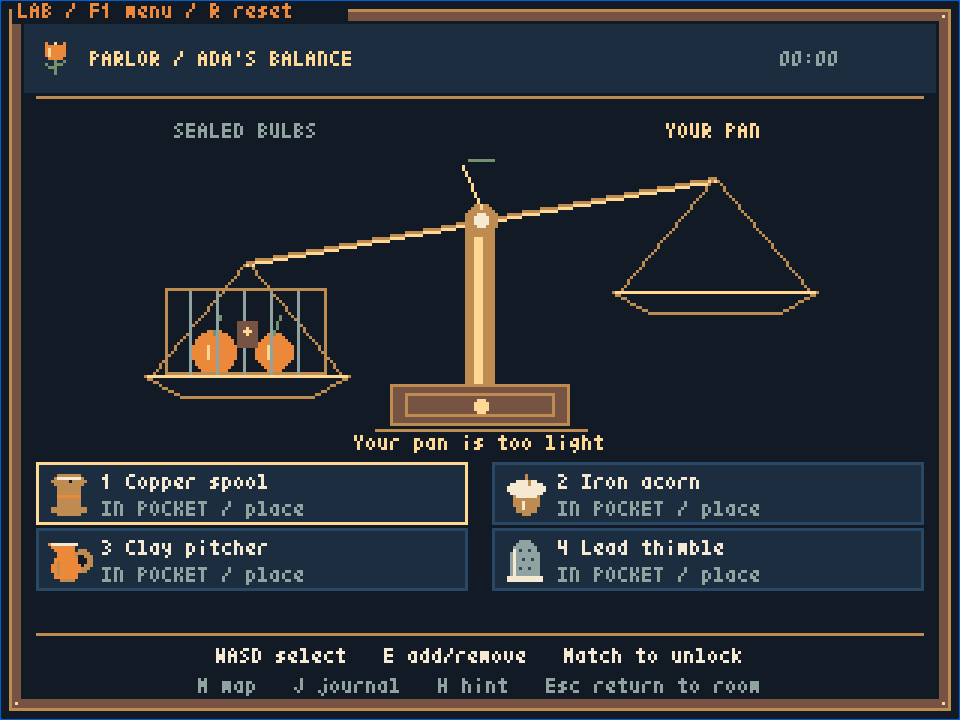
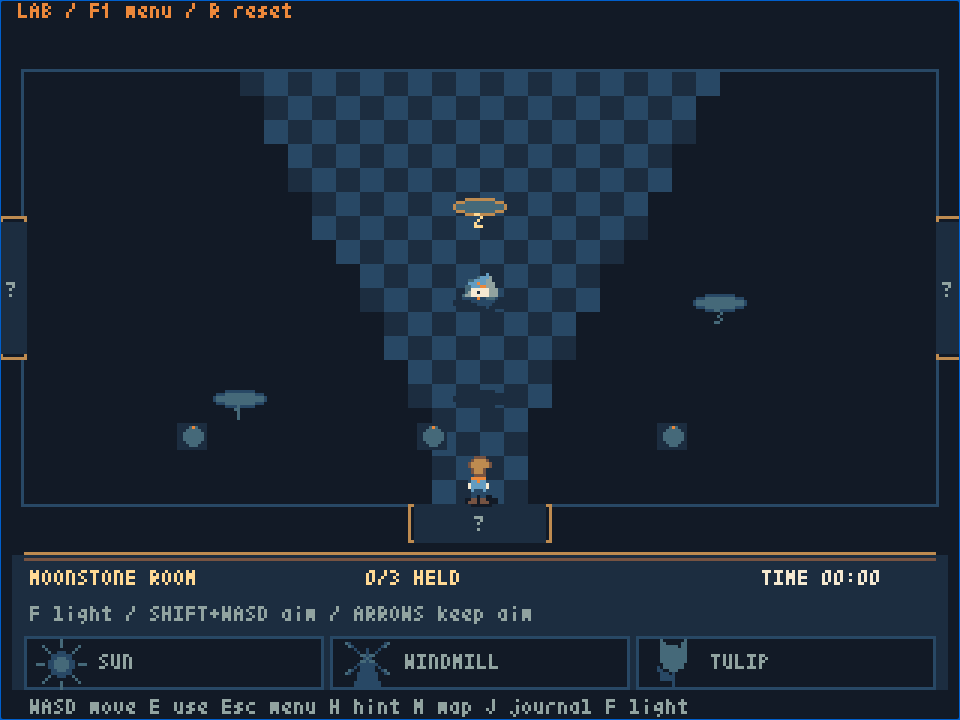
I wanted the mystery to reward curiosity without punishing experimentation. There are four difficulty presets, free hints, optional hidden rooms, and no death or countdown. A normal visit targets roughly 10–16 minutes, with more to discover if you keep exploring. Move with WASD or the arrows, interact with E, and use H for hints, M for the map, or J for the journal.
Under the hood, separate random streams keep room generation, puzzle states, and optional discoveries reproducible. A model-level validator checks connectivity, item access, clue dependencies, and puzzle solutions, then replays a winning route for a chosen seed and difficulty. It also exports collapsible hint and solution guides. The built-in puzzle lab, shown above, lets me jump straight into individual mechanisms while developing them.
The same Python game runs locally and in the browser through Pyxel Web. Its browser release packages the code and artwork into a static HTML file hosted on GitHub Pages.
You can find the source code, controls, and development notes on GitHub.
Back