In 2026, I spoke at Hackcon, a conference for hackathon organizers with roughly 300 attendees. I gave a 30-minute talk called How to Execute on Crazy Ideas Well, drawing on three years of experience as a backend developer, engineering lead, and product manager at Hack the North.
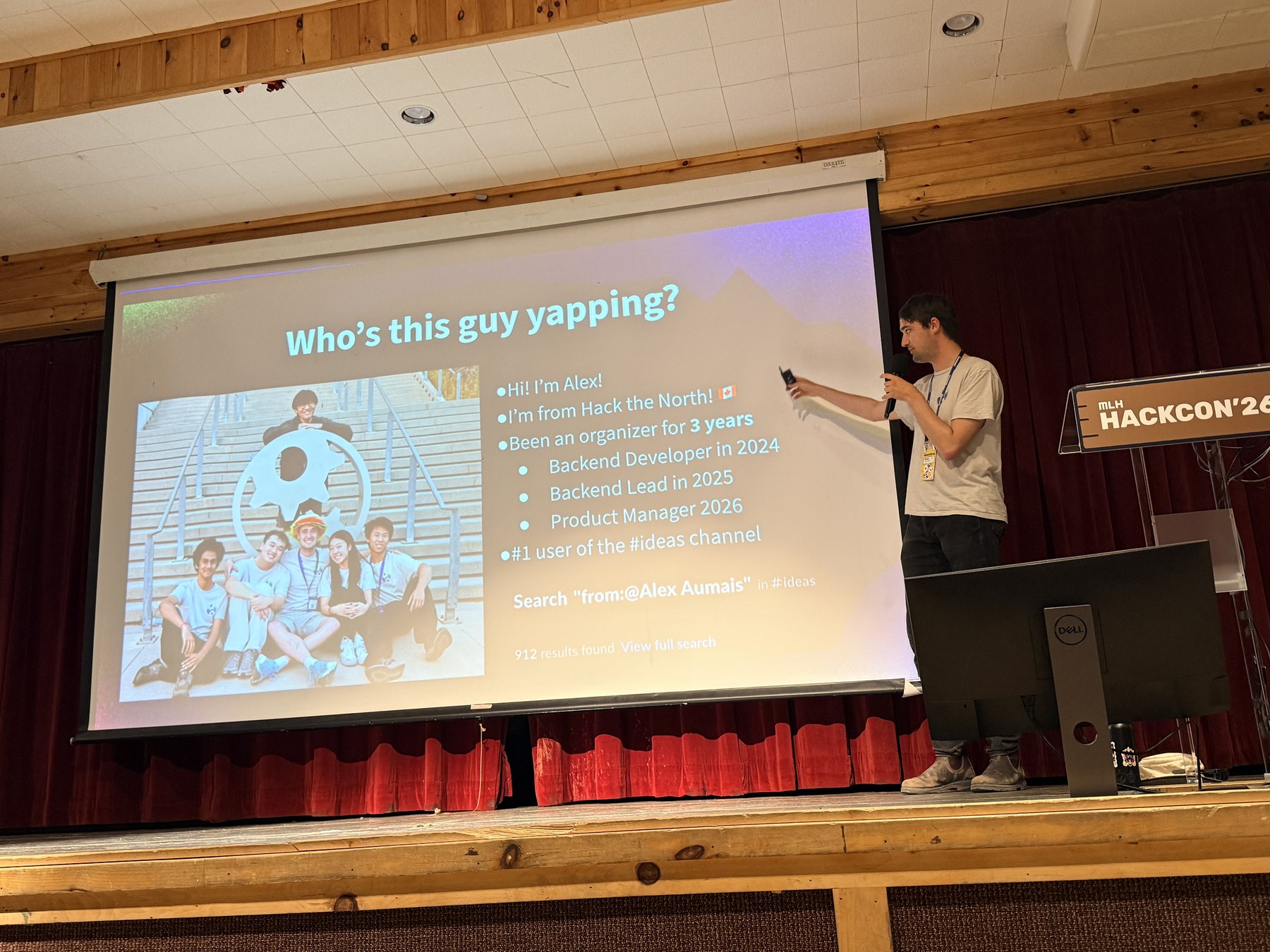
How to execute on crazy ideas well
The talk explored how an organization can build a culture where people share, encourage, and contribute to ideas - then turn the best of them into experiences that actually work. I broke that process into a few practical principles:
- Protect the basics. An ambitious side project should never put the event's essential logistics, safety, or infrastructure at risk.
- Pick an idea you love. Enthusiasm is the fuel that keeps a project moving, and teams do their best work when organizers can champion ideas they genuinely care about.
- Distill the idea. Define the feeling you want to create, the reason participants will care, a clear North Star, and the smallest version that delivers the experience.
- Make it easy to say yes. A concise pitch should explain the participant journey, the help required, the major risks, and a realistic backup plan.
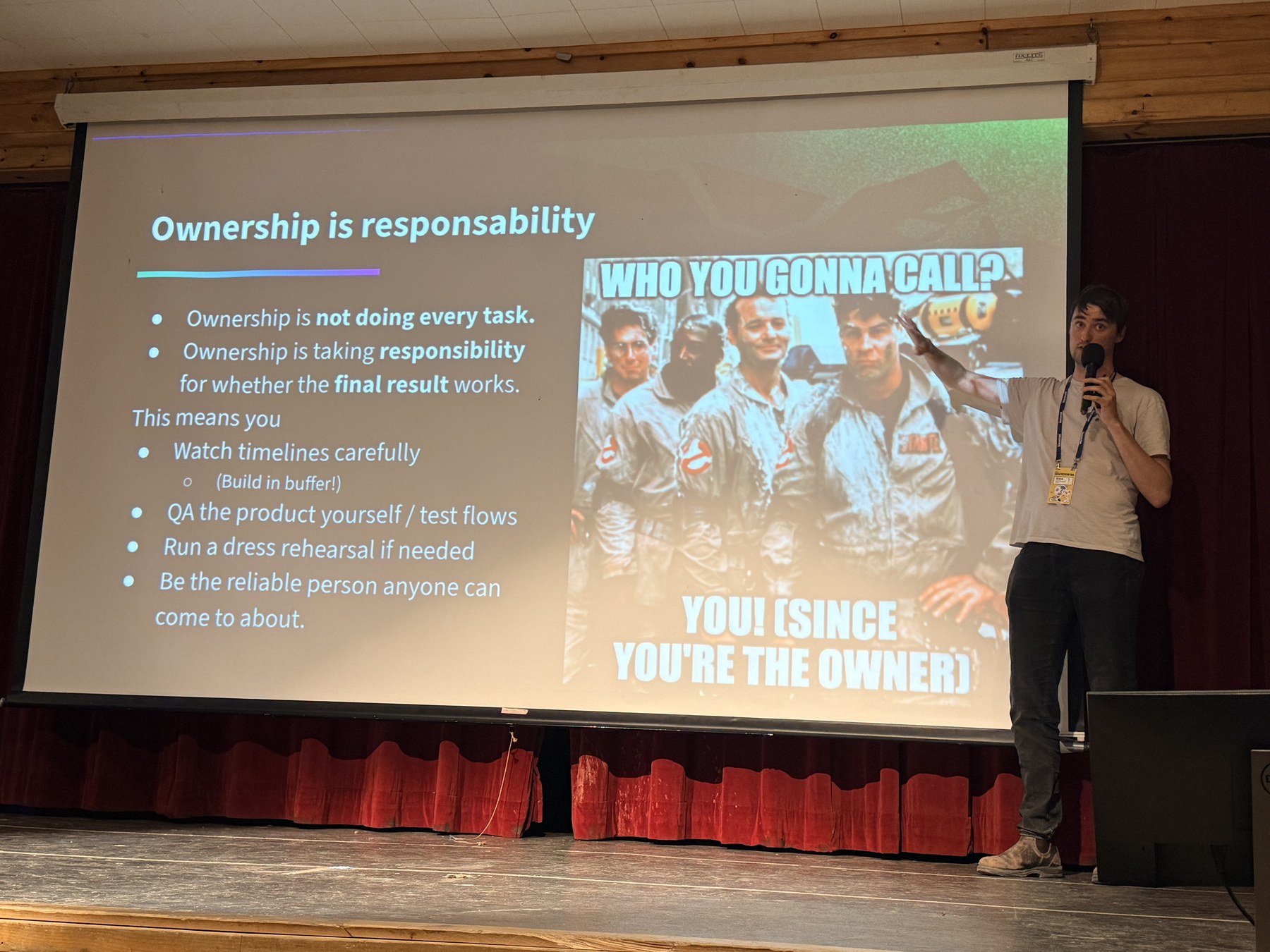
- Own the outcome. Ownership is not doing every task yourself; it is taking responsibility for whether the final result works across the whole team.
- Deliver the experience. Prototype early, create a deadline before the deadline, test with real users, and polish both the visible journey and the invisible details around it.
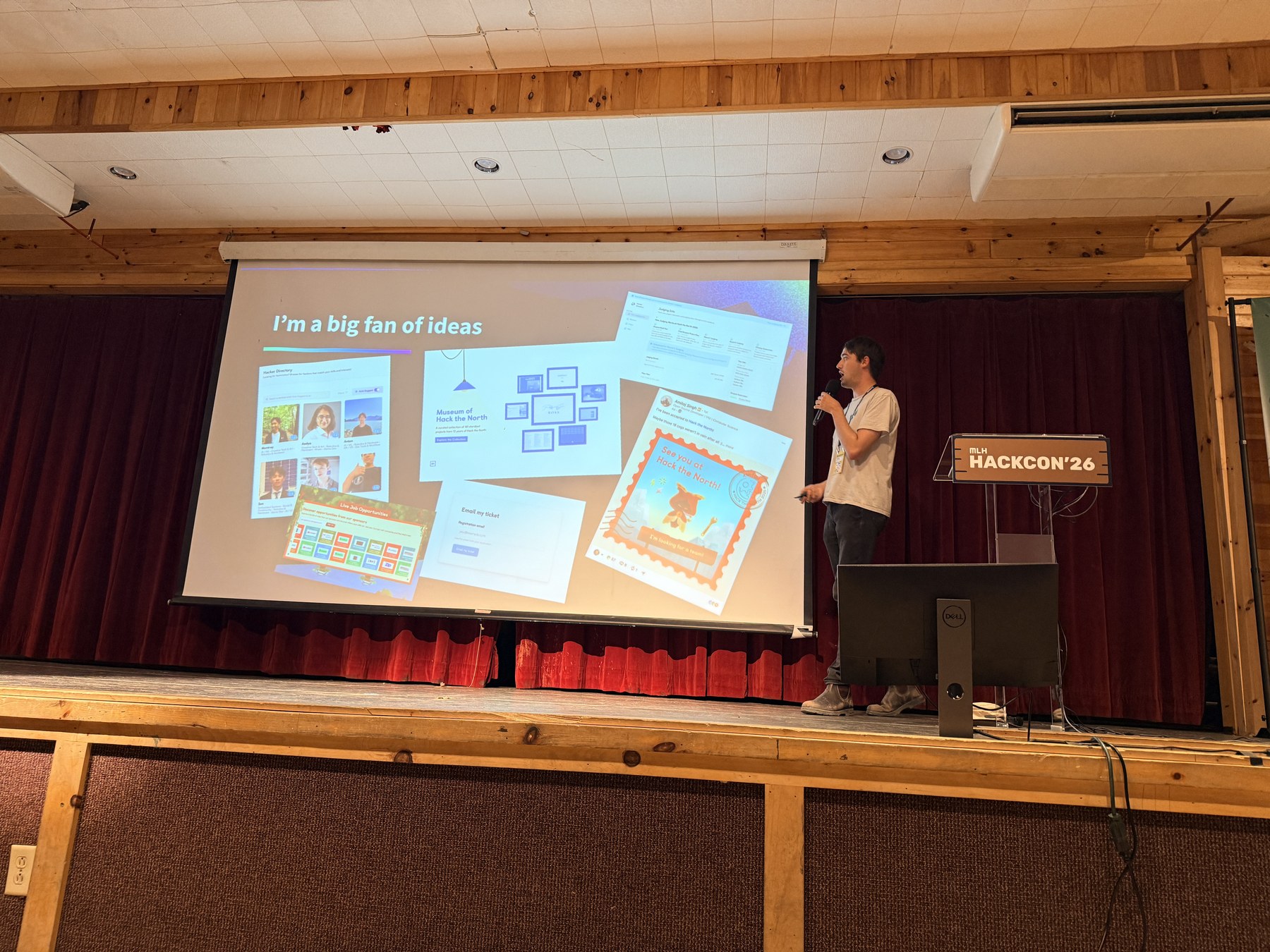
Capture the Flag as a case study
I used Capture the Flag, a project I led for Hack the North 2025, as the talk's main case study. Its three pillars were a skills-based acceptance path, accessible challenges, and rewarding fun over pure competition. Those principles gave us a way to make decisions about difficulty, progression, rewards, and recognition without losing sight of the participant experience.
The project also showed how to keep a crazy idea responsible. We isolated it from Hack the North's critical infrastructure, spread the work across a mixed team, tested every challenge end to end, and kept one clear owner for the final experience. The result reached 1,337 players and reinforced one of the talk's central ideas: simple and excellent beats impressive and broken.
The slides
You can find the complete talk slide deck here, or read it in the embedded viewer below.
Back